
What is lymphedema?

Lymphedema is a condition where lymphatic fluid builds up under the skin, causing swelling. This often happens in the arms or legs, but it can also affect areas like the chest, trunk, head, neck, and genitals. Lymphedema can be managed well through early identification, early treatment, and following treatment recommendations.

It occurs when the lymphatic system—which normally drains fluid and filters waste—doesn’t work properly. For individuals with spinal cord injury, this can happen due to reduced muscle activity, trauma, surgery, or other conditions such as deep vein thrombosis or heart failure.

The lymphatic system is part of your immune system and helps remove waste and toxins from your body. When lymphedema isn’t managed, it can lead to skin infections, pain, heavier limbs, and may even slow neurological recovery.

There are two types of lymphedema:

  • Primary lymphedema: Caused by problems in the lymphatic system from birth.
  • Secondary lymphedema: Caused by injury, surgery, or other conditions—common in spinal cord injury patients.
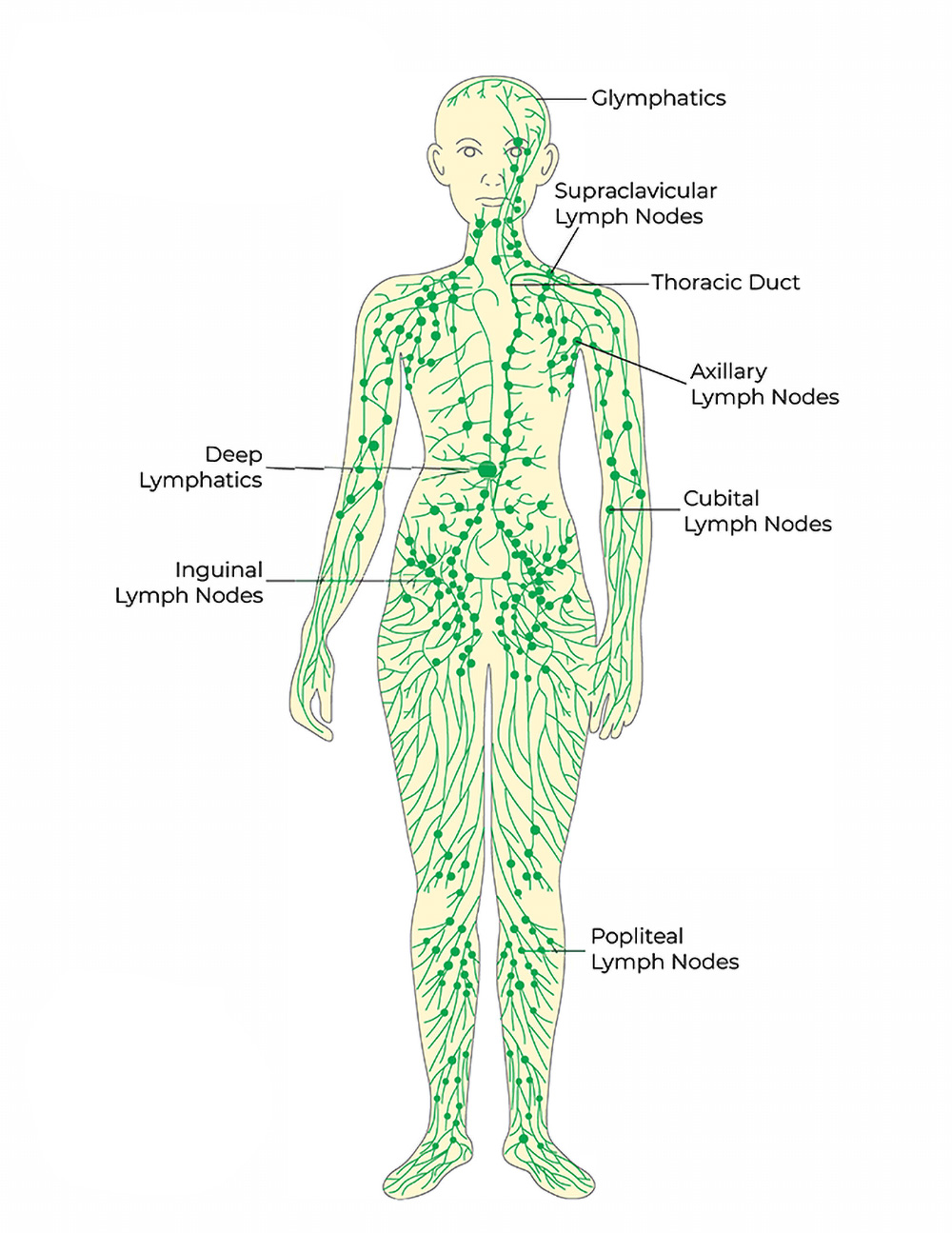
Diagram of a human body showing the lymphatic system, with labeled parts including the glymphatics, supraclavicular, axillary, cubital, inguinal, popliteal lymph nodes, deep lymphatics, and thoracic duct.
Illustration of the human lymphatic system, highlighting major lymphatic vessels, lymph nodes, and ducts.

Anatomy & physiology of the lymphatic system

  • The lymphatic system is a network of organs, vessels, and nodes that helps remove excess fluid and waste from the body.
  • Lymph fluid moves through these vessels with the help of muscle activity.
  • The system also supports the immune system by fighting infection.
  • When muscles aren’t active (such as after spinal cord injury), fluid can collect and cause swelling.

Causes & risk factors

  • Reduced muscle activity after spinal cord injury may lead to dependent edema.
  • Trauma or surgery affecting lymph nodes or vessels
  • Venous insufficiency
  • Deep vein thrombosis
  • IV infiltration (fluid from IV line leaks out of vein into skin and tissue)
  • Skin infections or wounds can worsen swelling.
  • Obesity

Signs & symptoms

  • Swelling in arms, legs, or other areas
  • Skin changes (pitting, thickening, hardening)
  • Feeling of heaviness or tightness

Treatment

Treatment for lymphedema is called Complete Decongestive Therapy and includes compression wrapping, compression garments, manual lymphatic drainage, exercise, and skin care.

Compression therapy

Compression wrapping: a series of soft wraps applied to the swollen area to reduce and soften the fluid. Once desired reduction is achieved, the area will be measured for compression garments.

Compression garments: socks, sleeves, or wraps that provide gentle compression to promote reduction achieved with compression wrapping in the swollen area. These may be custom-measured or off-the-shelf.

Refer to these Lymphedema Garment Education videos for instructions on wear and care of compression garments.

Manual lymphatic drainage (MLD)

Gentle massage to encourage the movement of lymph fluid to reduce swelling. This is a specialized technique that includes rhythmic skin-stretching in a specific sequence to stimulate the lymphatic system.

Exercise

Exercise plays an important role in managing lymphedema because muscle movement helps move lymph fluid through the body. When muscles contract, they act like a pump that assists lymphatic flow and helps reduce fluid buildup.

For individuals with spinal cord injury, exercise may include:

  • Active movement in areas where muscle function is present
  • Assisted or passive movement provided by a caregiver or therapist
  • Positioning and functional activities that encourage circulation

Regular movement, even gentle or assisted, can:

  • Help reduce swelling
  • Improve comfort and limb heaviness
  • Support overall circulation and skin health

Skin Care

Good skin care is an important part of managing lymphedema, especially for individuals with spinal cord injury. Swelling, changes in sensation, and limited mobility can increase the risk of skin breakdown and infection.

Key skin care principles include:

  • Keep skin clean and dry: Gently cleanse the skin daily and dry thoroughly, especially in skin folds.
  • Moisturize regularly: Use fragrance‑free lotion to prevent dryness and cracking, which can allow bacteria to enter the skin. Avoid applying lotion right before putting on compression garments.
  • Protect the skin: Avoid cuts, scratches, burns, or insect bites whenever possible. Even small injuries can increase the risk of infection.
  • Check the skin daily: Because sensation may be limited, regular skin checks help identify redness, warmth, swelling, or wounds early.
  • Monitor for signs of infection: Redness, increased swelling, warmth, pain, or fever should be reported to your healthcare team right away.

Healthy skin helps support lymphatic flow and reduces complications related to lymphedema.

You're on Shepherd Center's patient education website. For our hospital's main website, please visit shepherd.org.