Introduction

Keeping your wheelchair clean and well-maintained is the key to staying safe, comfortable, and making sure it lasts for years. On this page you’ll find helpful tips and short videos that will show you how to care for both manual and power wheelchairs — so you can keep moving with confidence.

What you’ll learn

Manual wheelchair

  • The right cleaning supplies to use
  • How to clean the frame
  • How to wash the seat back and cushion covers
  • How to put the cushion covers back on
  • How to clean the casters
  • How to adjust the air tires
  • Recommendations for daily, weekly, monthly and yearly maintenance
  • Reasons to contact your supplier
Power wheelchair

  • The right cleaning supplies to use
  • How to clean the frame
  • How to wash the headrest, seat back and cushion covers
  • How to put the cushion covers back on
  • How to charge the battery
  • How to adjust the air tires
  • How to protect your chair when driving in the rain
  • Recommendations for daily, weekly, monthly and yearly maintenance
  • Reasons to contact your supplier
Manual wheelchairs

Cleaning supplies and tools

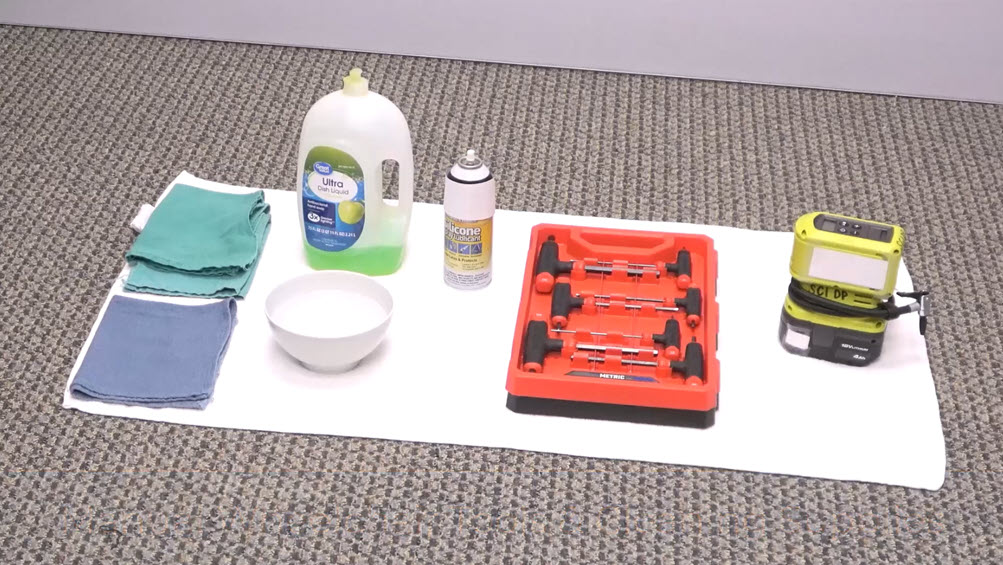
  • Soft cloth
  • Steel wool or 3M pad
  • Wire brush
  • Soap
  • Water
  • Teflon lubricant or silicone spray (not WD-40)
  • Air pump (if adjusting tire pressure in air tires)
  • SAE and/or Metric Allen wrenches sizes 5/32 and 3/16 or 4mm and 5mm dependent on whether your chair requires a standard or a metric Allen wrench set

Please refer to your user manual or manufacturer’s website for sizing of tools required, to prevent “stripping” your tools and/or bolts.

A white towel on a carpeted floor holds cloths, a bowl, a jug of dish soap, a can of silicone spray, a red set of wrenches, and a portable air pump, all neatly arranged in a row.

Cleaning the frame

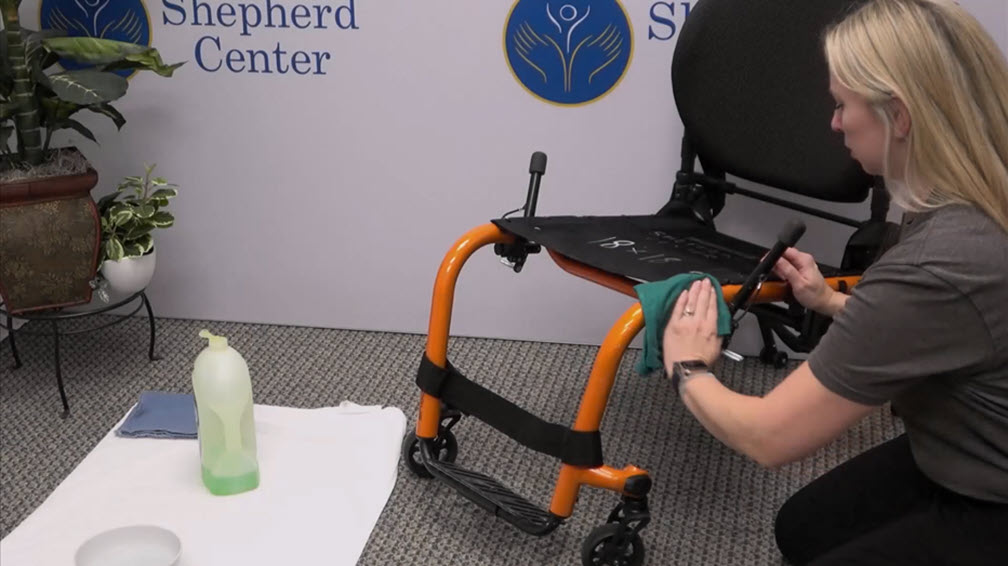
  • The frame/tubing of the wheelchair can be wiped down with a towel, soap and water. Wipe dry.
  • Use Teflon lubricant or silicone spray to wipe down axles, bolts on wheel locks, or any hinges on the wheelchair
    • Do not use WD-40
    • For the axles, use steel wool or a 3M pad to clean off the rust
    • Use a wire brush to clean off the rust inside the axle receiver
A woman cleans an orange wheelchair seat with a green cloth in a brightly lit room. A white towel, cleaning solution, and bowl are on the floor nearby. A Shepherd Center sign is visible on the wall behind her.

Washing the backrest and cushion covers

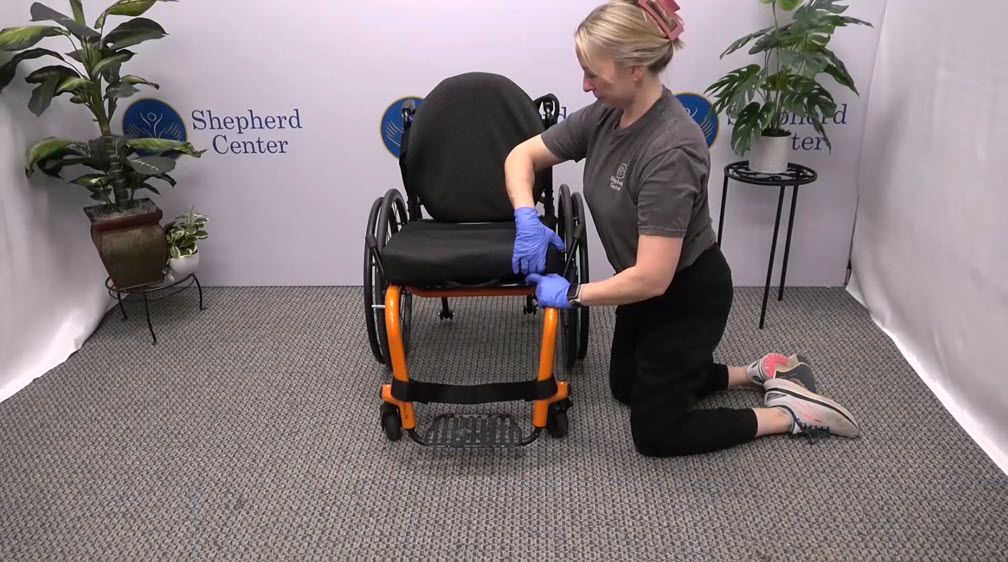
  • Wash in washing machine
    • Cold water, on gentle cycle
  • Air dry only. Do not put in dryer. This could cause the cover to shrink and not fit over the cushion properly
  • Inner incontinence liners can be wiped down with a towel and soap and water. Air dry only
  • Be sure to zip all covers before washing to protect the interior lining
A woman wearing gloves kneels on the floor while preparing to clean a wheelchair in a room with plants and a Shepherd Center sign on the wall.

Putting cushion covers back on

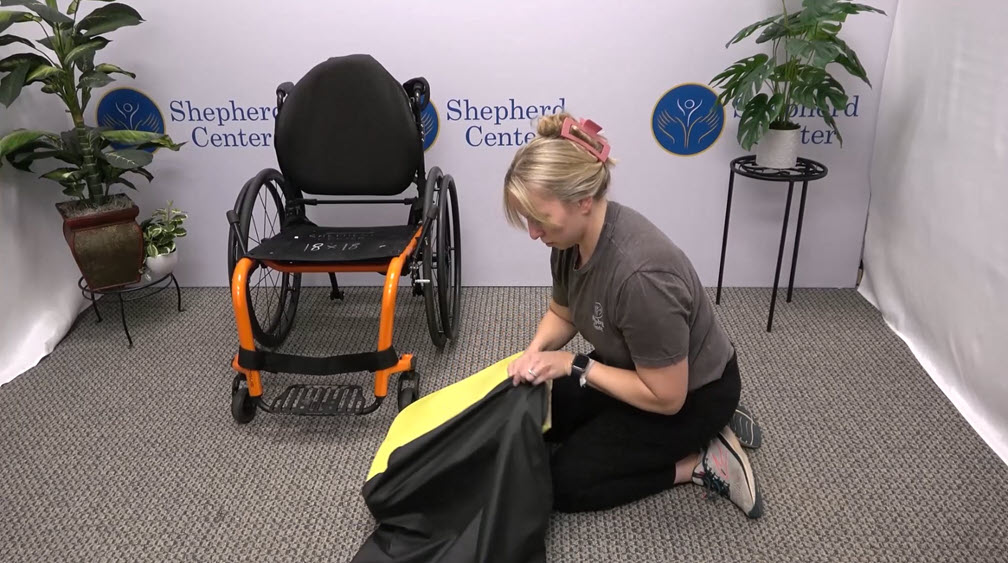
  • Once the cover is completely dry, place it back on the cushion
  • Make sure the front and back of the cushion aligns with the front and back of the cover
  • The zipper should always be in the back. If it is a gel cushion, ensure the gel is placed in the back
A woman kneels on the floor, putting a yellow cushion inside a black cloth cover. Behind her is an empty wheelchair with orange accents, a white backdrop with

Cleaning the casters

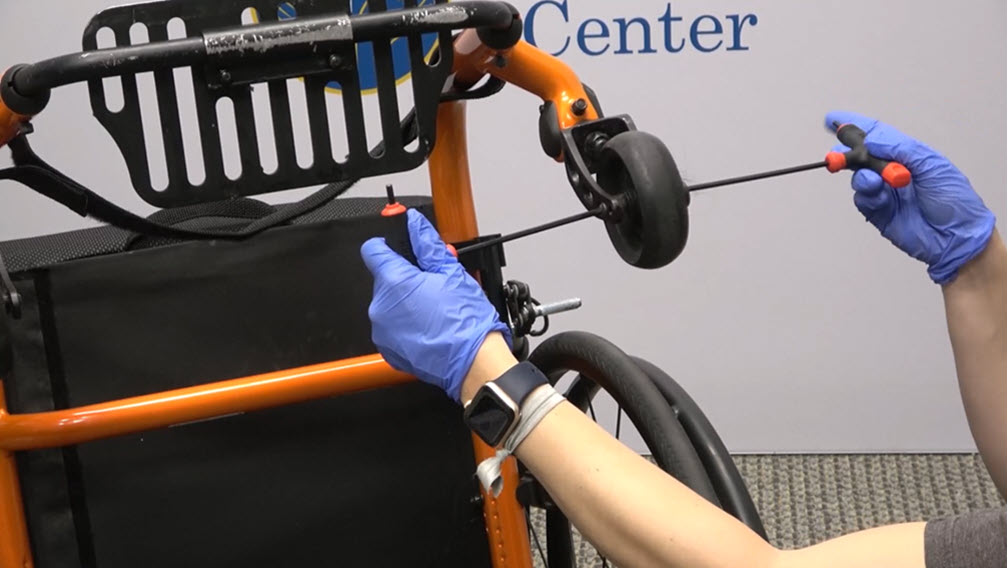
  • Tilt the wheelchair backwards to elevate the front casters
  • Remove the center screw(s) from the casters until the caster can be removed
  • Pull out the hair/dust/string/fur that is caught in the caster
  • With caster removed, use soft cloth with silicone spray or Teflon lubricant to clean the axle of the caster along with the bolts prior to reapplication
  • Place the caster back on and replace the screw(s) and washers. The washer will go on the inside of the axle prior to inserting the bolt through the center of the axle (don’t over tighten)
A person wearing blue gloves uses tools to remove the front caster of an orange wheelchair.

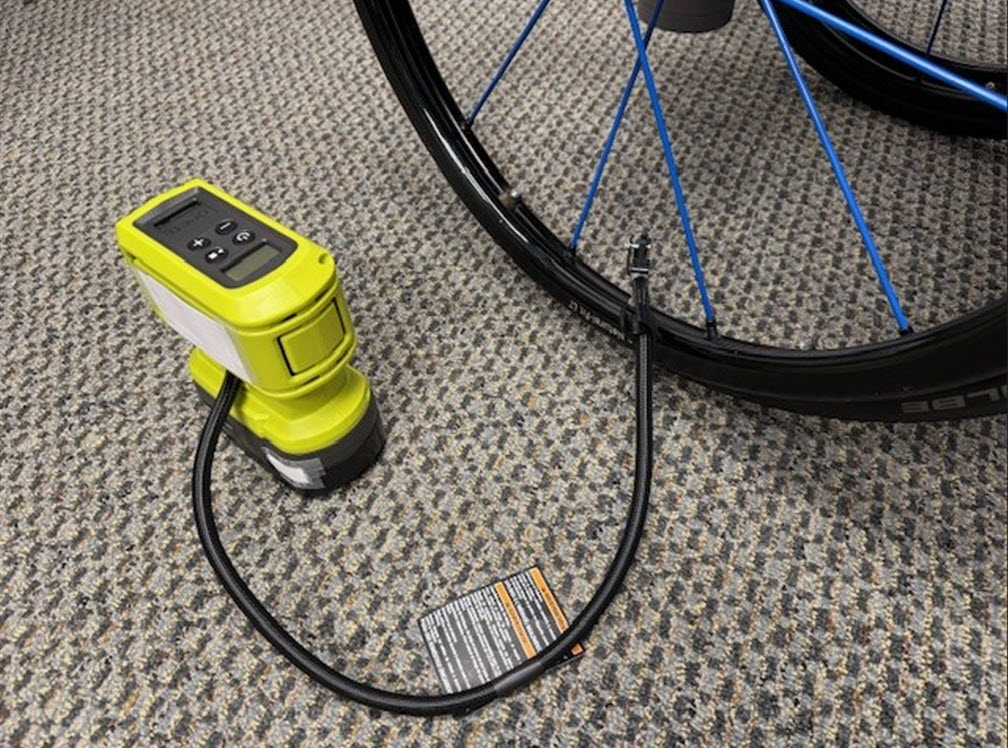
Adjusting air tires

  • Identify the proper tire pressure for your specific tire called PSI. This will be written on the side of the tire, similar to a vehicle or bicycle tire
  • Unscrew and remove the valve cap from the tire air valve
  • Connect the compressed air nozzle to the valve and adjust the tire pressure to the recommended level
  • Put the valve cap back on

Reference: Permobil website

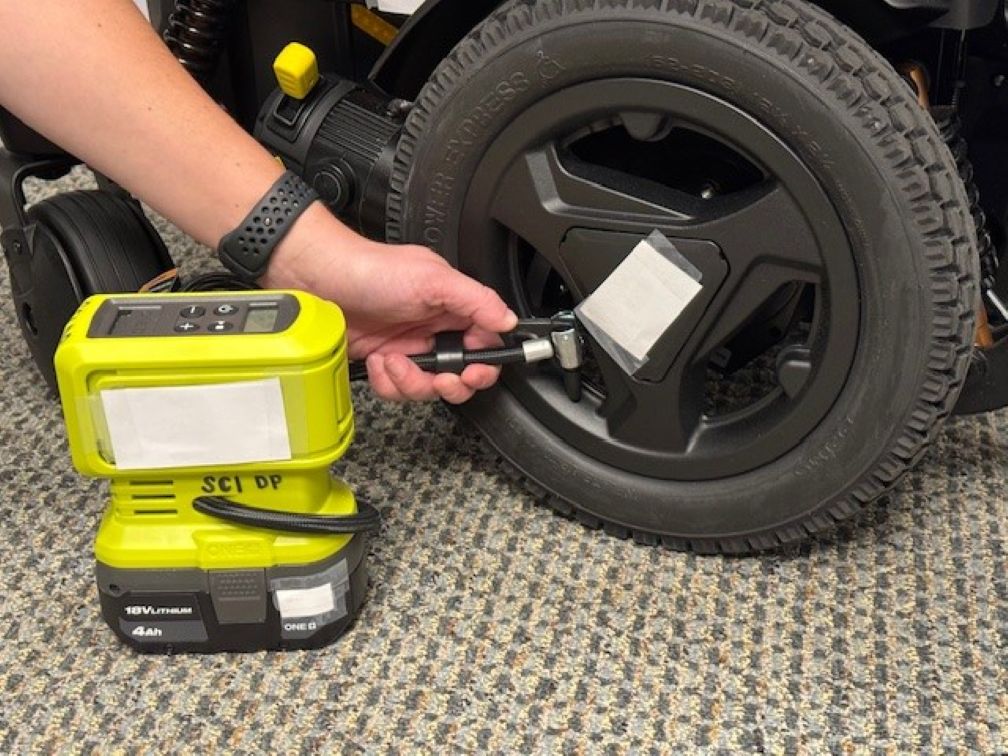
A portable electric air pump is connected to a wheelchair tire and is resting on a carpeted floor.

  • Daily maintenance
    • Wipe off the frame as needed due to visual dirt and debris
    • Ensure chair is operational such as wheel locks
    • Inspect to ensure anti-tip bars are intact and secured
  • Weekly maintenance
    • Check wheel locks and backrest bolts for tightness
    • Inspect hubs, rims, and casters for cracks and wear
    • If using air tires, check tire pressure
  • Monthly maintenance
    • Remove hair and clean casters
    • Make sure all spokes are uniformly tight
    • Clean axles, as directed above
    • Make sure hand rims are secure
    • Wash back and seat cushion covers
    • Check hardware for secure attachment on armrests, footrests, and headrest
    • Free spin all wheels and casters to check bearings
    • Secure bolts on tilting mechanism if you have a tilt-in-space wheelchair

Note: If you are unable to perform the above tasks monthly, please perform them at least every three months.

  • Yearly maintenance
    • Have wheelchair inspected by qualified technician

Reference: Recommendations from TiLite Rigid Owners Manual and Motion Composites “Maintaining Your Wheelchair for Top Performance”

Always know who your supplier is, contact information, and primary ATP

  • Cushion replacement at 3-year mark
  • Damaged cushion
  • If air cushion is consistently deflating
  • Refer to manufacturer website to patch hole
  • If gel cushion begins leaking
  • Wheelchair replacement at 5-year mark
  • If your chair is not maintaining a straight path
  • Spokes braking/wheel replacement
  • Camber readjustment
  • Skin breakdown
  • Broken parts – spokes, backrest, footplate

Power wheelchairs

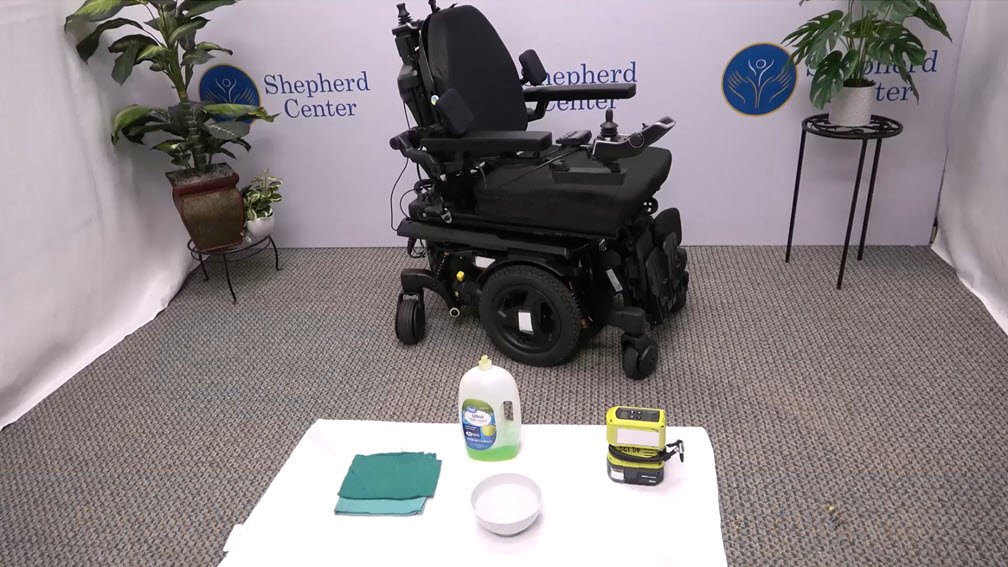
Cleaning supplies and tools

  • Soft cloth
  • Soap
  • Water
  • Air pump (if adjusting tire pressure in air tires)
A motorized wheelchair sits against a wall with the Shepherd Center logo. In the foreground, a table holds a cloth, disinfectant, a bowl, and a yellow device. Potted plants are on either side of the wheelchair.

Cleaning the frame

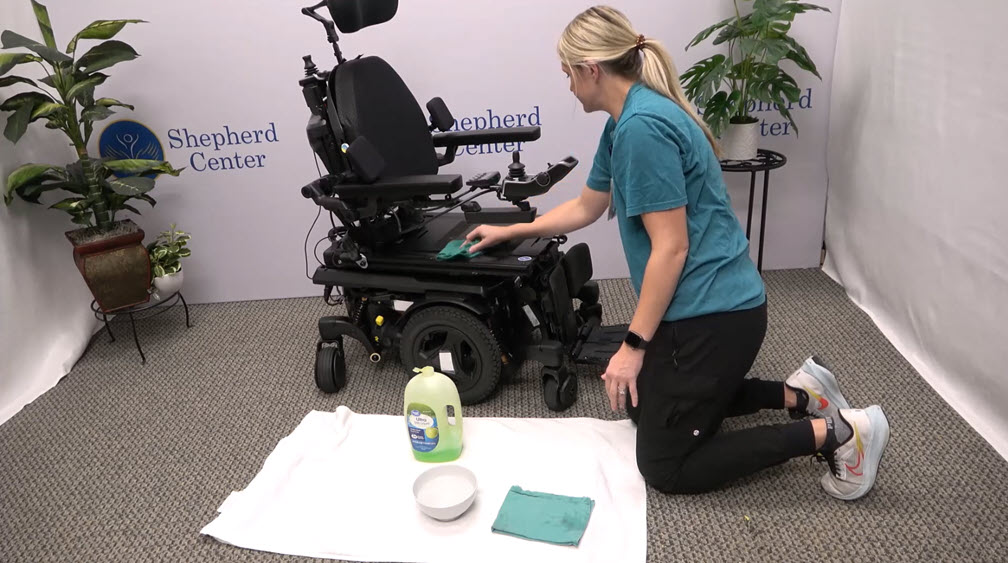
  • Wipe down and clean with a towel and soap and water
  • If you do not have cloth armrest, you can wipe them down too
    • Do not use any abrasive cleaners or chemicals
    • Do not use harsh lubricants such as WD-40
    • Do not hose down the power wheelchair with water. This could damage the batteries, motors, and/ or can rust the electronics
A woman kneels on a mat while cleaning a power wheelchair with a cloth. Cleaning supplies, including a bottle and a bowl, are on the mat beside her. The setting appears to be indoors with plants and

Washing the headrest, backrest, and cushion covers

  • The headrest, backrest and cushion covers can be washed in the washing machine
    • Cold water, on gentle cycle
  • Air dry only. Do not put in dryer. This could cause the cover to shrink and not fit over the cushion properly
  • Inner incontinence liners can be wiped down with a towel and soap and water. Air dry
  • The zipper for the cushion cover is typically found at the back of the cushion
  • The zipper for the backrest cover is typically found at the base of the backrest
  • The zipper for the headrest cover is typically found at the back of the headrest
  • Be sure to zip covers before washing to protect the interior lining
A person kneels beside a black power wheelchair, inspecting or attaching a component, in front of a Shepherd Center backdrop and potted plants.

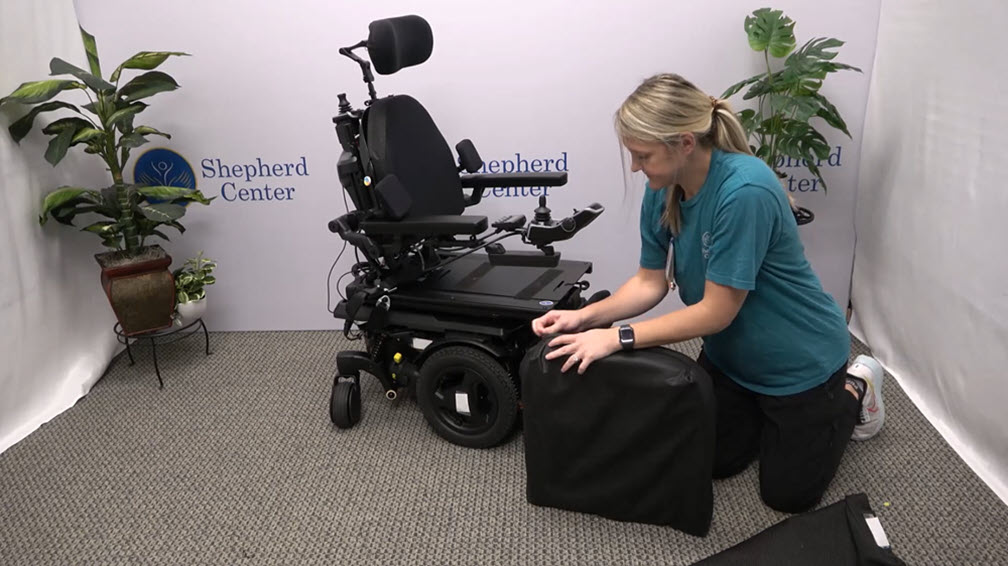
Putting the cushion covers back on

  • Once the cover is completely dry, place it back on the cushion
  • Make sure the front and back of the cushion aligns with the front and back of the cover
A woman kneels next to a black power wheelchair, attaching a black cover to the seat. The scene is indoors with potted plants and a Shepherd Center banner in the background.

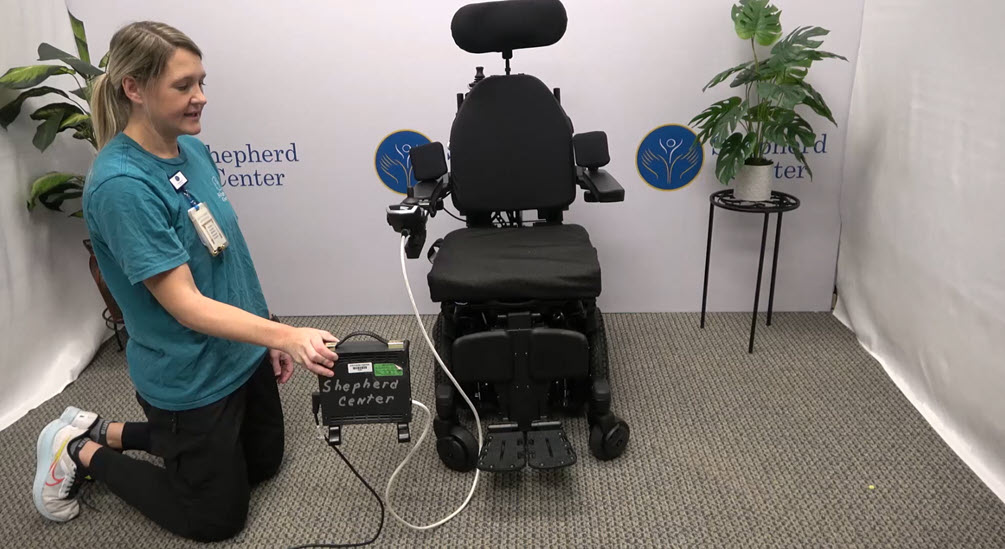
Charging the battery

  • Charge nightly
    • Turn chair off prior to charging
  • If you use your power wheelchair once a week or less, charge the batteries at least once per week for at least 24 hours
  • If the power wheelchair is not holding a charge and running down quickly, notify your supplier
    • You want to make sure the batteries are replaced before the power wheelchair becomes non-operational
    • If you notice corrosion on the battery, clean the terminals completely (ideally with a wire brush) and re-grease the terminal with petroleum jelly (not with ordinary oil). Make sure the terminal nuts and screws, wire, and wire clip are completely covered in petroleum jelly

Reference: Quickie Wheelchairs website

A woman kneels on the floor next to a power wheelchair, holding a charging box labeled

Adjusting air tires

  • Identify the proper tire pressure for your specific tire called PSI. This will be written on the side of the tire, similar to a vehicle or bicycle tire
  • Unscrew and remove the valve cap from the tire air valve
  • Connect the compressed air nozzle to the valve and adjust the tire pressure to the recommended level
  • Put the valve cap back on

Reference: Permobil website

A person uses a portable electric air pump to inflate the rear tire of a wheelchair. The pump is connected to the tire’s valve, and the wheelchair is on a carpeted floor.

Protecting chair controls in the rain

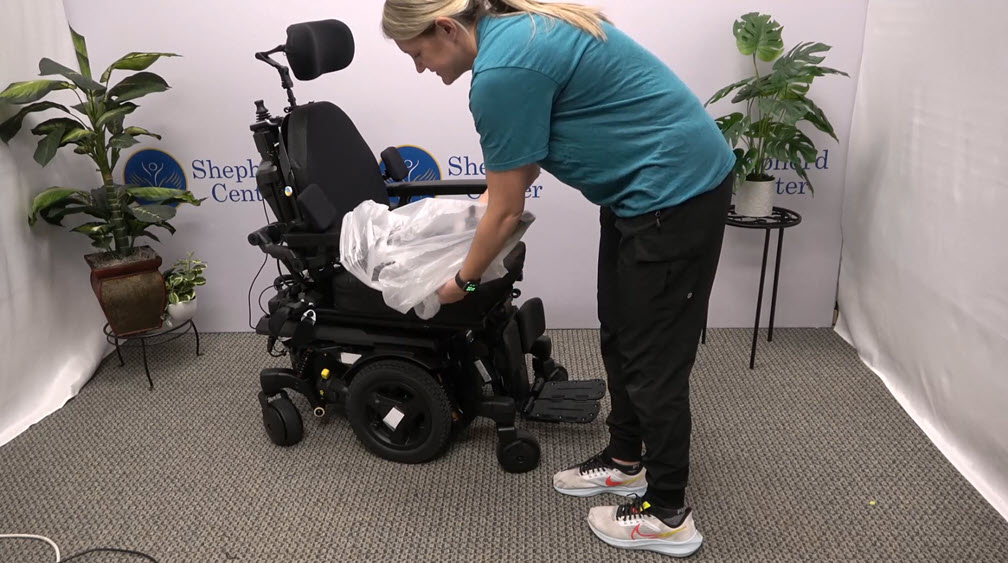
  • Cover the joystick with a plastic bag to protect the electronics
  • Driving the chair in light rain should not be a problem
    • Do not drive through puddles that would submerge the base of the power wheelchair

If your power wheelchair does get wet:

  • Dry wheelchair off with a clean towel
  • Place your chair in a warm area that receives plenty of sunlight for at least 12 hours so the moisture can evaporate
  • Once the wheelchair has dried out, check the joystick and the brakes to confirm they are still working correctly
  • If you run into problems, bring your wheelchair to a service provider

Reference: Quantum Rehab website

A person in a teal shirt and black pants places a clear plastic cover over the seat of a black power wheelchair, demonstrating daily living after neurological injury, in a room with plants and Shepherd Center logos on the walls.

Adjusting the headrest, laterals, footrest and armrest

Before you adjust your chair, have your care provider position you correctly

  • Daily maintenance
    • Check battery level and charge wheelchair nightly
  • Weekly maintenance
    • Make sure all removeable parts are securely fastened
    • Check tire pressure and inflate as necessary according to user manual
    • If wheelchair has lights and turn signals, make sure they are operational and clean
  • Monthly maintenance
    • Clean wheelchair
    • Wash back and seat cushion covers
    • Check upholstery, seating, and postural supports for wear
    • Check hardware for secure attachment on armrests, footrests, backrest, laterals, thigh/ pelvic supports, headrest, and joystick

Note: If you are unable to perform the above tasks monthly, please perform them at least every three months.

  • Yearly maintenance
    • Have wheelchair inspected and serviced by qualified technician

Reference: Recommendations from Permobil M3 Corpus User Manual

Always know who your supplier is, contact information, and primary ATP

  • Cushion replacement at 3-year mark
  • Damaged cushion
  • If air cushion is consistently deflating
  • Refer to manufacturer website to patch hole
  • If gel cushion begins leaking
  • Wheelchair replacement at 5-year mark
  • Battery not holding a charge
  • Electronics seem to be malfunctioning
  • Skin breakdown
  • Broken parts – headrest, thoracic laterals, footplate, thigh guides, pelvic guides, armrests
You're on Shepherd Center's patient education website. For our hospital's main website, please visit shepherd.org.